

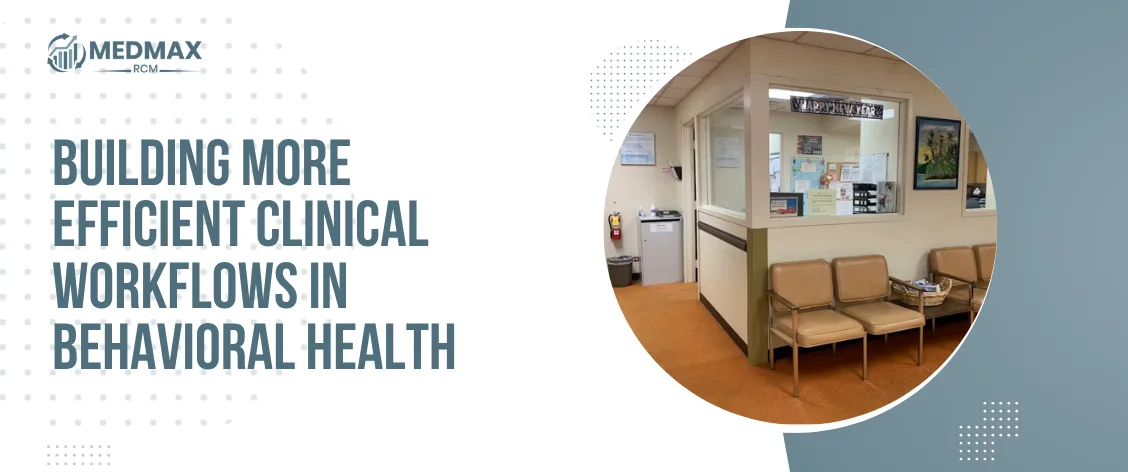
Building More Efficient Clinical Workflows in Behavioral Health
Behavioral health practices are facing unprecedented operational pressure. Patient demand continues to increase, yet providers must deliver timely, high-quality care while navigating workforce shortages and rising administrative workloads.
Documentation, referrals, insurance requirements, and fragmented communication often consume valuable clinical time. As a result, many organizations struggle to improve access without overwhelming their staff.
Optimizing clinical workflows offers a practical path forward. Efficient workflows reduce unnecessary administrative tasks, improve coordination between providers, and help patients receive care faster. They also create a better experience for clinicians, allowing them to focus on treatment rather than paperwork.
The encouraging news is that behavioral healthcare is already moving in this direction. Healthcare organizations are embracing integrated care models, standardized clinical assessments, and smarter operational processes to improve both efficiency and patient outcomes. Instead of treating workflow optimization as an operational exercise, many practices now recognize it as a clinical strategy that directly influences quality of care.
Table of Contents
ToggleCreate Integrated Care Teams Instead of Isolated Services
Behavioral health rarely exists in isolation. Patients often require support from primary care physicians, therapists, psychiatrists, behavioral health care managers, and social workers throughout treatment. When these professionals work independently, communication gaps become common. Patients repeat their medical billing history, referrals take longer, and treatment decisions become fragmented.
Integrated behavioral healthcare addresses those problems by creating coordinated workflows around the patient instead of individual departments. Providers collaborate using shared treatment plans, making it easier to deliver timely and consistent care.
The growing adoption of collaborative care demonstrates why this approach matters. According to Axios, collaborative behavioral healthcare has expanded rapidly since Medicare introduced reimbursement codes for these services in 2017. Those policy changes made integrated care financially sustainable for many organizations.
The results have been significant. Medicare Advantage patients receiving collaborative care increased from roughly 2,600 in 2018 to 20,780 in 2022, representing an eightfold increase. Traditional Medicare also recorded more than a fivefold increase during that period. Commercial insurance participation continued to grow, reaching nearly 36,600 patients in 2023.
These numbers suggest that integrated care is becoming the industry’s preferred model rather than a limited pilot program.
For behavioral health practices, this shift requires workflows that support continuous collaboration. Every provider should understand their responsibilities, communicate through shared clinical information, and contribute toward a unified treatment plan. Patients benefit from fewer delays, while clinicians spend less time coordinating fragmented care.
Set Up Clinical Workflows Before Purchasing Technology
Technology improves behavioral healthcare only when it supports a well-designed workflow. Many practices invest in new software before understanding how patients move through care, often creating additional complexity instead of improving efficiency.
The American Medical Association (AMA) recommends mapping the entire patient journey before introducing new technology or expanding behavioral health services. This process helps identify unnecessary delays, duplicated tasks, and communication gaps that digital tools alone cannot resolve.
A well-designed workflow should clearly define each stage of care, including:
Appointment scheduling and patient intake
Behavioral health screening and assessment
Documentation and treatment planning
Referrals and follow-up care
The AMA also stresses assigning clear responsibilities across the care team. For example:
Front desk staff distribute screening questionnaires.
Medical assistants collect completed assessments.
Clinicians review results and determine treatment.
Behavioral health specialists provide care.
Care managers coordinate referrals and follow-up.
Psychiatric consultants support complex cases.
Standardized screening protocols are equally important. Practices should decide who gets screened, which validated tools are used, who reviews results, and what steps follow positive findings. Consistent procedures reduce uncertainty and improve care coordination.
Clinics should ensure warm handoffs, where patients are introduced directly to behavioral health professionals during the same visit. This simple change strengthens engagement and reduces missed referrals.
Once these workflows are established, technologies such as shared electronic health records, referral tracking systems, and standardized documentation templates become powerful tools for improving efficiency rather than adding administrative work.
Strengthen the Workforce to Support Better Care
Even the most efficient workflow depends on having enough qualified professionals to deliver care. Integrated teams, standardized assessments, and digital tools can only improve outcomes when skilled clinicians are available to use them effectively. Unfortunately, workforce shortages remain one of the biggest barriers to improving behavioral health services.
Behavioral health practices rely on multidisciplinary teams that include psychiatrists, psychologists, therapists, social workers, care managers, and nurses. When one role is in short supply, the entire care pathway can slow down, leading to longer wait times and heavier workloads for existing staff.
Psychiatric nurses are a relevant example. Workforce surveys indicate that only 4% to 6% of licensed registered nurses currently work in psychiatric mental health. This translates to approximately 160,000 registered nurses specializing in psychiatric care, far below the number needed to meet growing national demand.
However, the growing availability of flexible learning options is creating new opportunities for registered nurses. They can transition into psychiatric care without stepping away from their current roles. Online PMHNP master’s degree programs, for example, allow working nurses to build advanced psychiatric knowledge while continuing to gain valuable clinical experience.
According to Felician University, this flexibility makes it easier to pursue specialized training without disrupting a career. As more nurses enter psychiatric practice through these pathways, behavioral health organizations can strengthen multidisciplinary teams. They can also expand patient access, reduce appointment delays, and build more efficient clinical workflows.
Let Data Drive Better Treatment Decisions
Clinical workflows become more effective when decisions are supported by objective information instead of memory alone. Many behavioral health providers still rely primarily on conversations to evaluate patient progress, making it difficult to identify meaningful changes consistently across multiple appointments.
A recent perspective published in the Journal of General Internal Medicine highlights the value of Measurement-Based Care (MBC). It describes MBC as one of the most practical workflow improvements behavioral health practices can implement. Rather than relying solely on clinical impressions, MBC encourages providers to collect standardized patient-reported outcomes throughout treatment using validated assessment tools.
This approach improves efficiency in several ways. Clinicians receive meaningful symptom information before appointments begin. Instead of spending valuable time gathering updates, they can immediately discuss treatment goals and patient concerns. Follow-up visits become more focused because providers already understand how symptoms have changed.
Repeated assessments also allow clinicians to identify ineffective treatments earlier. Rather than waiting months before recognizing limited progress, providers can adjust medications or therapy plans using objective symptom trends.
Measurement-Based Care also improves communication across multidisciplinary teams. Therapists, psychiatrists, primary care physicians, and care managers all work from the same standardized information. This reduces conflicting recommendations while supporting coordinated treatment planning.
Patients benefit as well. Tracking symptom scores helps them understand their own progress and encourages greater participation in treatment decisions.
Importantly, the authors note that Measurement-Based Care does not require extensive organizational restructuring. Compared with larger integration models, practices can often introduce standardized assessments using existing staff and workflows.
Use AI to Remove Administrative Friction
Administrative work remains a major challenge for behavioral health providers. Documentation, scheduling, billing, and care coordination often reduce the time available for patient care. Independent practices can feel this burden even more because they often operate with smaller teams.
Technology is helping many practices work more efficiently. A recent report highlighted by Psychiatric Times found that clinicians increasingly view artificial intelligence as a practical tool for streamlining administrative work. AI-assisted documentation, scheduling support, and workflow automation can simplify routine tasks while reducing manual workloads.
These tools are especially valuable for independent behavioral health practices. They allow clinicians to spend less time on paperwork and more time with patients. They also help smaller practices improve efficiency without sacrificing personalized care.
Lindsay Oberleitner, PhD, a full-time faculty member of clinical strategy, hopes the report reminds clinicians that they are not alone. She also believes that stronger independent practices can help make communities healthier and improve access to mental healthcare.
Technology alone cannot solve every operational challenge. However, when combined with efficient workflows and skilled professionals, it can strengthen independent practices while preserving the human connection at the heart of behavioral healthcare.
FAQs
What is the biggest challenge to improving behavioral health workflows today?
Many organizations struggle with a combination of workforce shortages, administrative burdens, and fragmented communication. Even well-designed workflows become difficult to maintain when qualified professionals are unavailable. Addressing staffing gaps and streamlining daily operations are equally important for long-term success.
Why is care coordination important in behavioral healthcare?
Many behavioral health patients receive support from multiple providers during treatment. Strong care coordination ensures that everyone involved shares relevant information and works toward the same treatment goals. This reduces duplicated work, prevents communication gaps, and improves the overall patient experience.
How can registered nurses transition into psychiatric mental health?
Many registered nurses pursue advanced education to specialize in psychiatric care while continuing to work. Flexible online PMHNP master’s degree programs make this transition more accessible by allowing nurses to build specialized skills without leaving their current positions. This pathway helps strengthen the behavioral health workforce while creating new career opportunities.
Key Figures to Know
Medicare Advantage patients receiving collaborative care | 2,600 (2018) → 20,780 (2022) |
Commercial insurance patients receiving collaborative care | Nearly 36,600 (2023) |
Growth in Traditional Medicare collaborative care | More than 5× (2018–2022) |
Licensed RNs working in psychiatric mental health | Only 4%–6% |
Registered nurses specializing in psychiatric care | Approximately 160,000 |
Optimizing clinical workflows has become essential for delivering high-quality behavioral healthcare. As demand for mental health services continues to grow, practices must improve efficiency without compromising patient care.
When efficient workflows, skilled professionals, and supportive technology come together, behavioral health practices can improve access, reduce burnout, and deliver better care. Ultimately, optimizing clinical workflows is not just about making practices more efficient. It is about creating a healthcare system that is more responsive, coordinated, and patient-centered.

Related Posts



Williams Clark
Williams Clark is a dual-certified healthcare professional with CPC and CHC credentials. With over a decade of experience in medical billing and compliance auditing, David provides deep insights into payer policies, denial prevention, and accurate coding practices. His mission is to empower medical billers and healthcare providers with the knowledge to stay compliant and profitable.