


Anxiety Disorders Explained: Symptoms, Causes, and Treatment Options
Anxiety disorders are among the most common mental health conditions, affecting millions of people worldwide. They involve intense fear, worry, or dread that is often disproportionate to the actual situation. While occasional anxiety is a normal part of life, anxiety disorders go beyond temporary stress and can interfere with daily functioning.
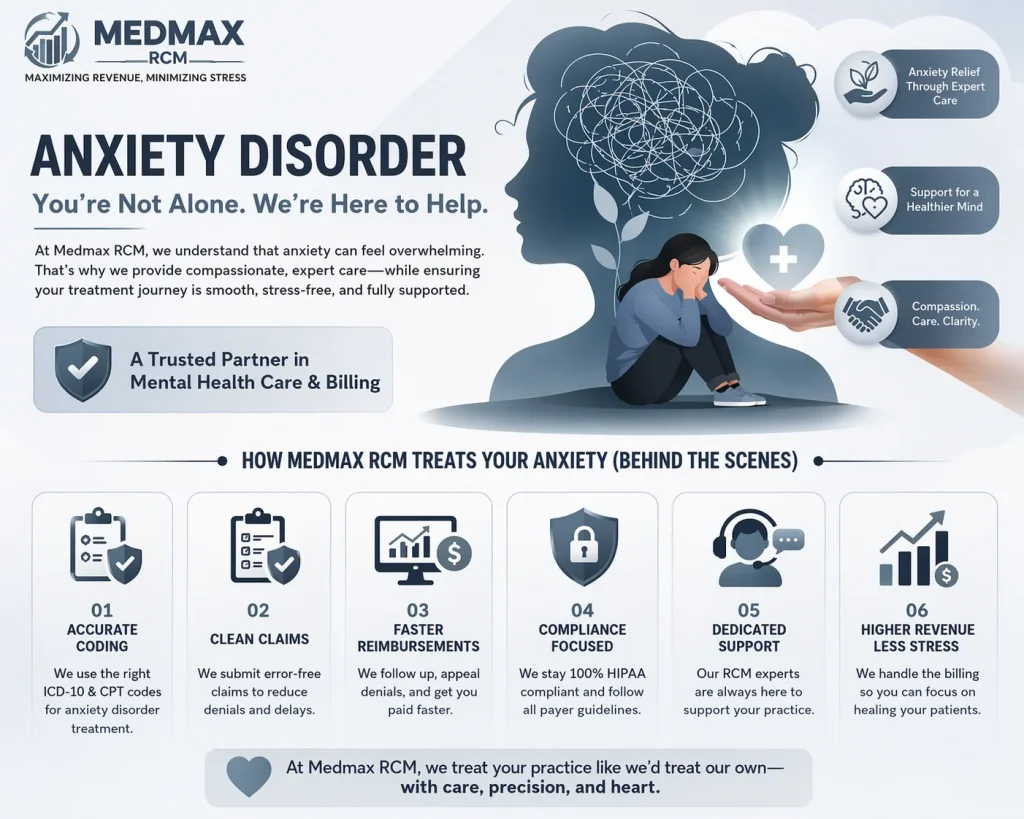
At MedMax RCM, we believe in spreading awareness about mental health conditions and helping individuals understand how proper care and treatment can improve quality of life.
Table of Contents
ToggleWhat Is an Anxiety Disorder?
An anxiety disorder is a mental health condition in which a person reacts to certain situations with excessive fear, worry, or nervousness. These reactions may also include physical symptoms such as a rapid heartbeat, sweating, or shortness of breath.
It’s important to understand that some level of anxiety is completely normal. For example, you might feel nervous before a job interview, an exam, or an important decision. In fact, mild anxiety can sometimes be helpful it keeps you alert and focused in potentially risky or important situations.
However, anxiety becomes a disorder when:
- It starts interfering with your daily life and responsibilities
- Your reactions are stronger than the situation requires
- You find it difficult to control your fear or worry
Anxiety disorders can affect people of all ages, including children, teenagers, and adults. Research shows that women are about twice as likely as men to experience these conditions.
Without proper management, anxiety can make even simple daily tasks feel overwhelming. The good news is that effective treatments are available, and many people experience significant improvement with the right approach.
Types of Anxiety Disorders
According to the DSM-5 (Diagnostic and Statistical Manual of Mental Disorders), there are several types of anxiety disorders. Each type has its own characteristics and triggers.
Generalized Anxiety Disorder (GAD)
This condition involves constant and excessive worry about everyday issues such as work, health, or finances. People with GAD often feel overwhelmed and find it difficult to control their concerns, even when there’s no clear reason to worry.
Agoraphobia
Agoraphobia is the fear of being in situations where escape might be difficult or help may not be available. This can include crowded places, open spaces, or even leaving home. Many individuals begin to avoid these environments entirely.
Panic Disorder
Panic disorder is marked by repeated and unexpected panic attacks. These episodes can occur suddenly and include symptoms like chest pain, dizziness, and intense fear. Some individuals also develop agoraphobia alongside panic disorder.
Specific Phobias
A specific phobia is an intense fear of a particular object or situation such as heights, animals, or flying. The fear is so strong that it disrupts daily life and leads to avoidance behavior.
Social Anxiety Disorder
Previously known as social phobia, this condition involves a deep fear of being judged, embarrassed, or negatively evaluated by others. It can make social interactions, public speaking, or even casual conversations extremely stressful.
Separation Anxiety Disorder
Although commonly associated with children, this condition can also affect adults. It involves excessive fear or distress when separated from loved ones or caregivers.
Selective Mutism
Selective mutism occurs when a person is unable to speak in certain social situations due to anxiety, despite being able to communicate normally in other settings. It is more common in children but can persist into adulthood. It’s also worth noting that conditions like PTSD, OCD, and acute stress disorder share similarities with anxiety disorders but are classified separately.
How Common Are Anxiety Disorders?
Anxiety disorders are highly prevalent across the globe. Studies show:
- Specific phobias affect up to 12% of people
- Social anxiety disorder affects around 7%
- Generalized anxiety disorder affects about 3%
- Agoraphobia affects up to 1.7%
- Separation anxiety disorder affects both children and adults
- Selective mutism is rare, affecting less than 1%
These numbers highlight how widespread anxiety disorders are and why awareness and treatment are so important.
Symptoms of Anxiety Disorders
Symptoms can vary depending on the type of anxiety disorder, but they generally fall into two categories: psychological and physical.
Psychological Symptoms
- Persistent fear, worry, or dread
- Feeling restless or constantly “on edge”
- Irritability or mood swings
- Difficulty concentrating
- Intrusive or obsessive thoughts
Physical Symptoms
- Rapid heartbeat (palpitations)
- Shortness of breath
- Muscle tension
- Sweating or cold hands
- Dry mouth
- Nausea
- Tingling or numbness
- Sleep problems, including insomnia
If these symptoms occur frequently or begin to disrupt your daily life, it’s important to seek professional help.
What Causes Anxiety Disorders?
The exact cause of anxiety disorders is not fully understood, but experts believe a combination of factors contributes to their development.
Chemical Imbalances
Neurotransmitters like serotonin, dopamine, norepinephrine, and GABA play a key role in regulating mood. Imbalances in these chemicals can increase anxiety levels.
Brain Function
The amygdala the part of the brain responsible for processing fear may become overactive in individuals with anxiety disorders, leading to heightened responses to stress.
Genetics
Anxiety disorders often run in families, suggesting a genetic component. If a close family member has an anxiety disorder, your risk may be higher.
Environmental Factors
Long-term stress, traumatic experiences, or major life changes can trigger or worsen anxiety disorders.
How Are Anxiety Disorders Diagnosed?
If you suspect you have an anxiety disorder, a healthcare provider will begin with a full evaluation. This includes:
- A physical exam
- Review of your medical history
- Discussion of your symptoms and daily habits
There are no specific lab tests to diagnose anxiety disorders. However, doctors may run tests to rule out other conditions, such as thyroid disorders.
If no physical cause is found, you may be referred to a mental health professional. They will assess your condition using DSM-5 criteria, focusing on:
- The type and severity of symptoms
- How long symptoms have been present
- The impact on your daily life
Treatment Options for Anxiety Disorders
Anxiety disorders are highly treatable. At MedMax RCM, we emphasize the importance of personalized care plans that combine different treatment methods.
Medications
While medications do not cure anxiety disorders, they can significantly reduce symptoms.
- Antidepressants (SSRIs & SNRIs): Commonly used to regulate mood and reduce stress
- Benzodiazepines: Provide quick relief but are usually prescribed for short-term use due to dependency risks
- Beta-blockers: Help control physical symptoms like rapid heartbeat
Always consult your denial management before starting or stopping any medication.
Psychotherapy (Talk Therapy)
Psychotherapy helps individuals understand and manage their thoughts, emotions, and behaviors.
Cognitive Behavioral Therapy (CBT)
CBT is the most effective therapy for anxiety. It helps identify negative thought patterns and replace them with healthier responses.
Exposure Therapy
This approach gradually exposes individuals to their fears in a controlled environment, helping them build confidence and reduce avoidance.
Outlook and Risks
If left untreated, anxiety disorders can lead to serious complications, such as:
- Reduced quality of life
- Difficulty maintaining relationships
- Substance abuse
- Depression
- Increased risk of heart-related issues
Early treatment can prevent these complications and significantly improve overall well-being.
Can Anxiety Disorders Be Prevented?
There’s currently no guaranteed way to prevent anxiety disorders. However, early intervention and proper treatment can reduce their impact and help individuals manage symptoms effectively.
Living with Anxiety: Self-Care Tips
In addition to professional treatment, lifestyle changes can make a big difference.
Manage Stress
Practice relaxation techniques like meditation, deep breathing, or mindfulness.
Stay Active
Regular exercise helps reduce stress and improves mood.
Join Support Groups
Connecting with others who share similar experiences can provide emotional support and practical coping strategies.
Educate Yourself
Understanding anxiety can help you and your loved ones manage it better.
Limit Caffeine
Caffeine can worsen anxiety symptoms, so it’s best to reduce intake if needed.
When to See a Doctor
You should consult a healthcare provider if:
- Your anxiety feels overwhelming or constant
- Symptoms interfere with your daily life
- Your current treatment isn’t working
Your provider can adjust your treatment plan to better suit your needs.
Final Thoughts
Living with constant fear or worry can be exhausting, but you don’t have to face it alone. Anxiety disorders are highly treatable, and with the right combination of medication, therapy, and lifestyle changes, you can regain control of your life.
At MedMax RCM, we encourage early diagnosis and proper care to improve long-term outcomes. Taking the first step toward help can make a significant difference in your mental and emotional well-being.
Frequently Asked Questions
What are 10 types of anxiety disorders?
Anxiety disorders involve excessive, persistent fear or worry that interferes with daily life, commonly treated with therapy and medication. Major types include Generalized Anxiety Disorder (GAD), Panic Disorder, Social Anxiety Disorder, Agoraphobia, Specific Phobias, Separation Anxiety Disorder, Selective Mutism, and Substance-Induced Anxiety.
Is anxiety a disability?
Yes, anxiety can be considered a disability under certain circumstances if it is severe, diagnosed by a professional, and substantially limits major life activities such as working, sleeping, or concentrating. It is recognized under the Americans with Disabilities Act (ADA) for workplace accommodations and can qualify for Social Security disability benefits if it prevents gainful employment for at least 12 months.
What is the most rare anxiety disorder?
Illness anxiety disorder (previously called hypochondriasis) is a rare but recognized anxiety disorder that affects around 0.1% of people in the U.S. It causes persistent and excessive worry about having a serious medical condition, even when medical tests show no signs of illness. Other uncommon, specialized, or culturally related anxiety disorders also exist.
What is the #1 worst habit for anxiety?
Avoidance is widely considered the #1 worst habit for anxiety. By constantly skipping uncomfortable situations, places, or conversations, you gain short-term relief but reinforce long-term fear, causing anxiety to grow over time. Other top harmful habits include chronic sleep deprivation, procrastination, excessive caffeine, and seeking constant reassurance.




Emily Thompson
Emily Thompson is a Revenue Cycle Management (RCM) Specialist with extensive experience in the medical billing industry. She helps healthcare organizations and medical billing companies improve claim efficiency, reduce A/R backlogs, and implement data-driven RCM strategies. Emily’s articles focus on end-to-end medical billing services, denial prevention, and technology-driven revenue optimization for healthcare practices across the U.S.