


ICD-10 Code for Leukocytosis: Elevated WBC – A Complete Overview
Leukocytosis (D72.829) is a common ICD-10 code used to describe a high white blood cell count in clinical settings. In 2025, it appeared in almost 12% of outpatient hematology complaints and 8% of inpatient blood disease claims. However, about 15-20% of these claims were denied because of insufficient supporting documentation. Coders and billers often lose revenue when the diagnosis does not match the laboratory data.
Although it is a billable, specific code, D72.829 may not be precise enough when the subtype (e.g., lymphocytosis, monocytosis, bandemia) is known. On October 1, 2024, the 2025 ICD-10-CM code set confirmed the billable status of D72.829 with no changes. Using an unspecified code instead of a more precise option can increase audit and denial risks when subtype test results are available.
This article explains when to use ICD-10 codes for leukocytosis and how to improve billing accuracy. You’ll see comparisons with specific sibling codes, documentation requirements, sequencing strategies, and real-world examples related to denial prevention. The goal is to help coders, billers, and healthcare providers maximize reimbursement while reducing claim risks.
Table of Contents
ToggleICD-10 Code for Leukocytosis
This section introduces the code D72.829 and explains when to use it. It also explains why accurate documentation and billing requirements are important.
Code Definition and Validity
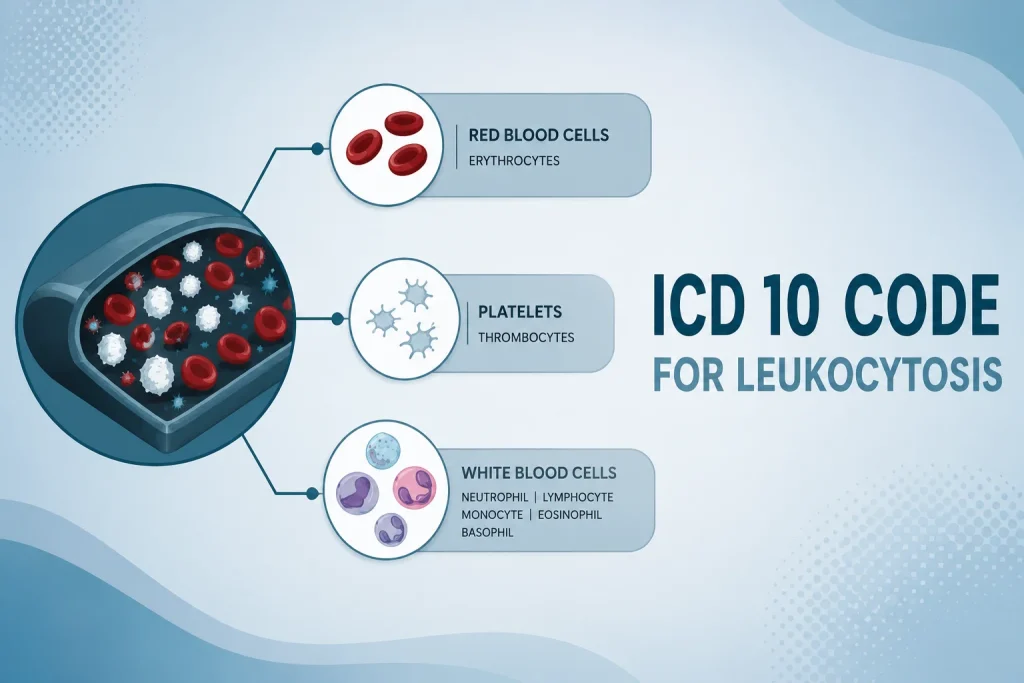
ICD-10-CM Code D72.829 means “Elevated white blood cell count, unspecified.” It is a billable code used to report leukocytosis when the increase in white blood cells (e.g., neutrophils, lymphocytes, etc.) cannot be documented or determined at the time of the encounter.
- Valid for use with HIPAA-compliant transactions.
- According to the most recent ICD-10-CM changes, this code is effective from October 1, 2024, to September 30, 2025.
- When the code is used repeatedly without a clear clinical reason, it may lead to documentation or medical necessity audits.
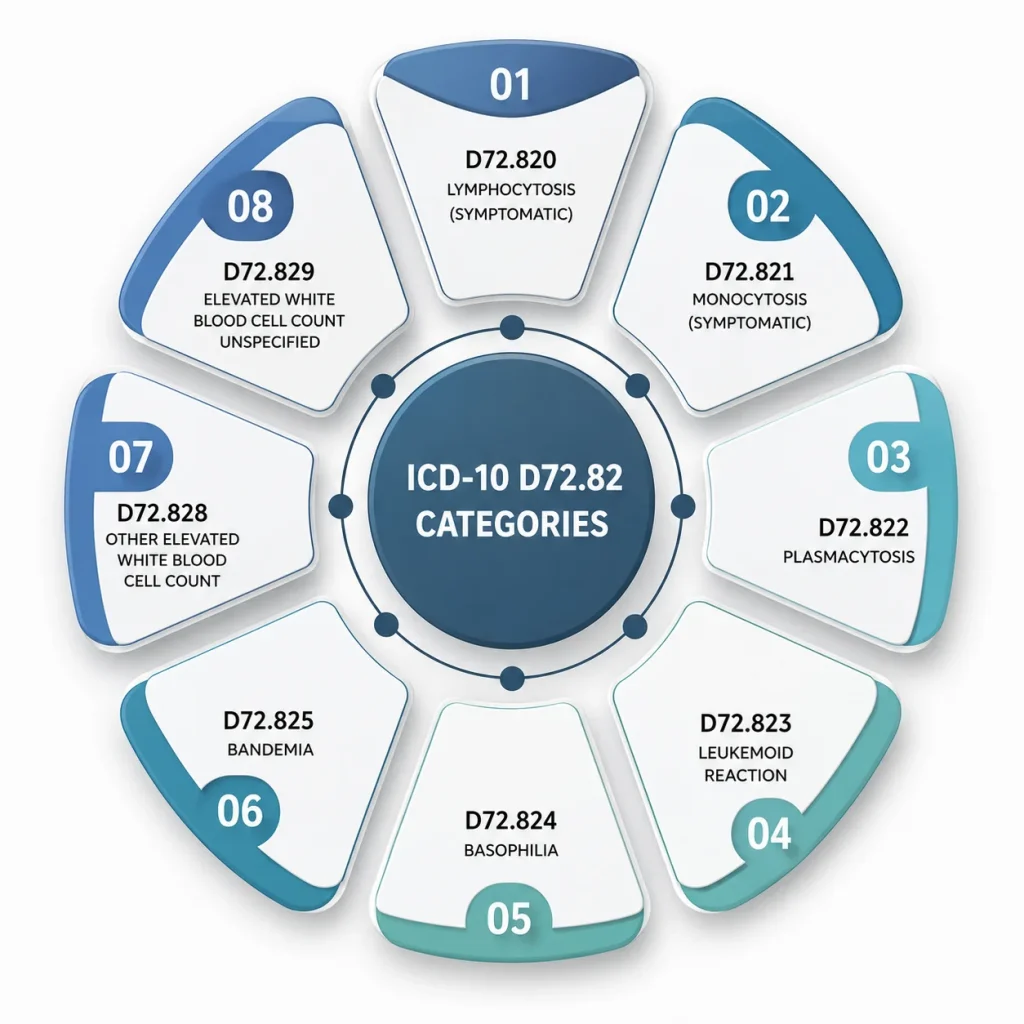
Related Codes (D72.820–D72.828)
When test results or provider notes identify the elevated white blood cell subtype, coders should use a more specific code from the D72.82 series.
When to Use D72.829 vs Related Codes (D72.820–D72.828)
This section explains when to use the ICD-10 code for leukocytosis. It shows the difference between unspecified and specific subtype codes based on documentation and laboratory findings.
Use of Specified Codes First
When the elevated white blood cell subtype is identified in the documentation, medical coders should prioritize using specific leukocytosis codes (D72.820-D72.828). These codes, such as neutrophilia (D72.822) or basophilia (D72.826), provide more clinical information and better match ICD-10 coding requirements.
Using specific codes helps insurance reviewers understand the medical reason for the services billed. This can reduce confusion and lower the risk of claim rejection or requests for additional documentation.
Specific coding also supports better tracking of population health trends, especially in cases involving infections, inflammation, or hematologic disorders. Coders should make sure the medical record supports the selected code to meet payer policies and regulatory requirements.
Risks of Using Unspecified Code
Using the general ICD-10 code for leukocytosis (D72.829) without a clear clinical reason can increase the risk of claim rejection or reimbursement delays. Payers may flag generic codes for additional review because they may indicate a lack of supporting evidence or services that are not properly supported.
Unspecified codes can also affect the accuracy of clinical data, which may influence future treatment decisions and population health reporting. Whenever possible, coders should avoid using D72.829 when the medical documentation provides information about the specific white blood cell type involved.
Documentation Requirements for Coding Leukocytosis
This section explains the clinical documentation needed to support the ICD-10 code for leukocytosis. The focus is on medical records that support code selection and improve claim accuracy.
Clinical Notes Must Include
Clinical notes should document the white blood cell (WBC) count and include the normal range for comparison. This helps confirm the presence of leukocytosis and supports the use of the ICD-10 code (D72.829). Without numerical lab data, insurers may question the medical necessity.
Notes should also document any possible causes or related conditions, such as infection, trauma, stress, or medication reactions. Stating whether the leukocytosis is acute, chronic, or reactive provides additional clarity. Documenting follow-up testing or treatment activities can also strengthen the reason for the selected code.
Tips for Medical Billing Specialists
Here are some useful tips:
- Always review test results to confirm leukocytosis before assigning the ICD-10 code (D72.829).
- Use more specific codes (D72.820-D72.828) when the documentation supports them, especially when the cause or subtype is known.
- Avoid using nonspecific codes when additional clinical information is available, as they may lead to denials or downcoding.
- If leukocytosis affects therapy or billing, make sure the documentation connects it to the underlying diagnosis.
- To reduce errors, regularly update coding processes based on payer requirements and the latest 2025 ICD-10 coding revisions.
Conclusion
The ICD-10 code for leukocytosis (D72.829) should be assigned correctly based on laboratory data and complete clinical documentation. Coders should use more specific codes whenever subtype information is available to help prevent denials and audits. Clear and complete documentation protects reimbursement and supports compliance with current payer requirements. Staying updated with the latest ICD-10-CM guidelines can lead to fewer billing issues and stronger claim support. This approach reduces financial risk while improving reporting accuracy.
FAQs
Are there related ICD-10 codes that specify the type of leukocytosis?
Yes. D72.820–D72.828 include codes for specific types of leukocytosis, such as neutrophilia, eosinophilia, and basophilia.
What is the ICD-10 code for leukocytosis?
The ICD-10 code for leukocytosis is D72.829 – “Elevated white blood cell count, unspecified.”
Why do insurers deny claims for leukocytosis?
Common reasons include unclear documentation, mismatched lab data, or a lack of support for medical necessity.
When should I use D72.829 instead of a more specific code?
Use D72.829 when the cause or specific type of leukocytosis is unknown or is not clearly documented in the clinical notes.
What documentation is required to support leukocytosis coding?
Include clinical signs, lab results (e.g., CBC), suspected or confirmed causes, and the provider’s assessment.
What is the ICD-10 code for leukocytopenia?
The primary ICD-10-CM code for unspecified leukocytopenia (leukopenia) is D72.819. Depending on the specific cause or clinical presentation, alternative codes like D72.818 (other decreased white blood cell count) or D70.9 (neutropenia/agranulocytosis) may apply.
What is the ICD-10 diagnosis code for leukocytosis?
The primary and most common ICD-10-CM code for general or unspecified leukocytosis is D72.829 (Elevated white blood cell count, unspecified).
Specific Leukocytosis Codes
If the lab work or doctor’s notes identify a specific type of elevated white blood cell count, different subcodes should be used instead of the unspecified code:
- D72.820: Lymphocytosis (symptomatic)
- D72.821: Monocytosis (symptomatic)
- D72.822: Plasmacytosis
- D72.823: Leukemoid reaction




Jessica Collins
Jessica Collins is a Certified Professional Coder (CPC) specializing in medical billing services and revenue cycle management (RCM). She works closely with healthcare providers and medical billing companies to streamline claim processing, reduce denials, and enhance reimbursement efficiency.