

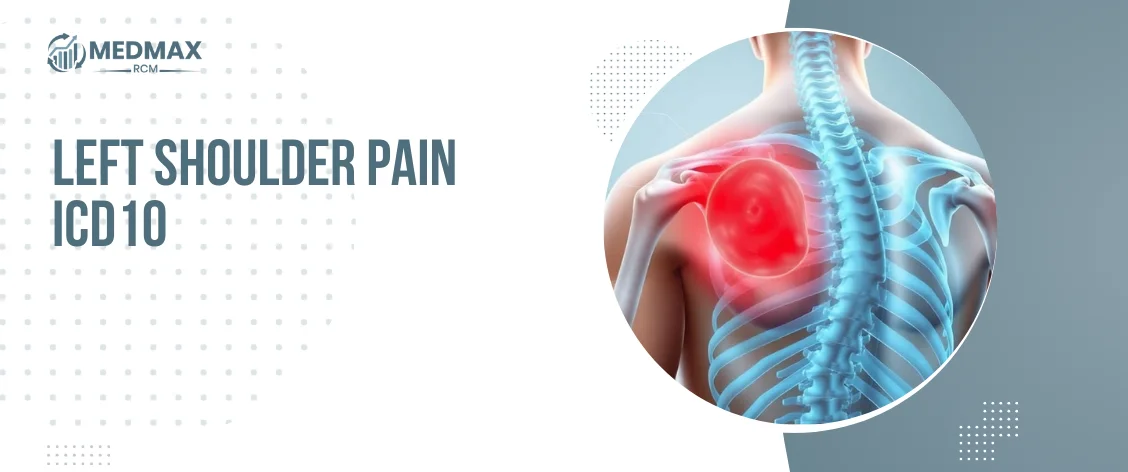
Left Shoulder Pain ICD 10 (M25.512): A Complete Guide
Left shoulder pain is a common problem seen in clinical practice. It can happen because of injuries, inflammation, joint disorders, or other musculoskeletal conditions. To accurately document and bill this condition, healthcare providers use ICD-10 code M25.512, which specifically represents pain in the left shoulder joint.
Using this diagnosis code correctly helps improve clinical documentation, supports accurate claim submission, and reduces the chances of claim denials. In this guide, we explain the meaning of ICD-10 code M25.512, its symptoms, common causes, related codes, and important medical billing considerations for healthcare providers and coding professionals.
Table of Contents
ToggleICD-10 Code M25.512 – Pain in Left Shoulder
| Field | Details |
|---|---|
| ICD-10 Code | M25.512 |
| Description | Pain in Left Shoulder |
| Category | M25 – Other joint disorders |
| Billable Code | Yes |
| ICD-10 Version | 2024 / 2025 ICD-10-CM |
| Common Usage | Used when a patient reports pain in the left shoulder joint without a more specific diagnosis |
ICD-10 code M25.512 is used to report pain in the left shoulder joint when healthcare providers have not yet identified the exact underlying condition. This billable code belongs to the category “Other joint disorders” and is widely used in medical records, clinical reporting, and insurance claim submissions.
What is ICD-10 Code M25.512?
ICD-10-CM code M25.512 represents pain in the left shoulder joint. It is classified under Chapter 13: Diseases of the Musculoskeletal System and Connective Tissue and falls under the subcategory M25 – Other joint disorders.
Healthcare providers use this code when a patient has pain in the left shoulder, but a more specific diagnosis, such as tendonitis, arthritis, or a rotator cuff injury, has not yet been confirmed.
Understanding ICD-10-CM Codes
The International Classification of Diseases, 10th Revision, Clinical Modification (ICD-10-CM) is the official coding system used in the United States to classify diagnoses, symptoms, and procedures related to patient care. These alphanumeric codes are important for documenting medical conditions, processing insurance claims, tracking health statistics, and supporting public health programs.
The code for left shoulder pain is M25.512. Here’s a simple breakdown of the code:
- M25: Refers to other joint disorders that are not classified elsewhere.
- .51: Identifies the affected body area as the shoulder.
- 2: Indicates the affected side, with “2” representing the left shoulder.
This is a symptom code, meaning it describes the patient’s main complaint instead of the exact medical condition causing the pain. It is commonly used when the provider has not yet made a final diagnosis. For example, a doctor may assign the M25.512 ICD 10 code during a patient’s first visit for shoulder pain before imaging tests, such as an MRI, identify the exact cause, like a rotator cuff tear.
Common Symptoms of Left Shoulder Pain
Patients diagnosed with ICD-10 code M25.512 may experience one or more of the following symptoms:
- Ongoing or occasional shoulder pain
- Reduced range of motion in the shoulder joint
- Tenderness or swelling around the shoulder
- Difficulty lifting or turning the arm
- Stiffness or discomfort during movement
- Pain that spreads to the upper arm or neck
Healthcare providers should clearly document these symptoms to support accurate diagnosis, medical coding, and claim processing.
Possible Causes of Left Shoulder Pain
Many medical conditions can cause shoulder pain. Providers may initially report these cases with M25.512 until they confirm the exact diagnosis.
Common causes include:
- Rotator cuff injuries
- Shoulder tendonitis
- Bursitis
- Arthritis of the shoulder joint
- Muscle strain or ligament injury
- Frozen shoulder (adhesive capsulitis)
- Overuse or repetitive motion injuries
A thorough clinical evaluation is necessary to determine whether a more specific diagnosis code should be assigned instead of M25.512.
Related ICD-10 Codes for Shoulder Pain
| ICD-10 Code | Description |
|---|---|
| ICD-10 Code | M25.512 |
| M25.511 | Pain in right shoulder |
| M25.512 | Pain in left shoulder |
| M25.519 | Pain in unspecified shoulder |
| M75.01 | Adhesive capsulitis of shoulder |
Including related codes helps medical coders select the most accurate diagnosis code based on the patient’s documented condition.
Medical Billing Guidelines for ICD-10 Code M25.512
When reporting M25.512, healthcare providers and medical coders should follow these documentation and billing best practices:
- Clearly document that the patient has left shoulder pain.
- Include supporting symptoms and physical examination findings.
- Use a more specific diagnosis code whenever one is available.
- Review payer-specific requirements before submitting the claim.
- Verify coding accuracy to reduce claim denials and reimbursement delays.
Accurate coding is essential for clean claims, timely reimbursement, and effective revenue cycle management.
Why Accurate Coding Matters
Accurate ICD-10 coding is an important part of a successful revenue cycle for every medical practice. Incorrect or incomplete coding can create several challenges, including:
- Claim Denials: Insurance companies may deny claims if the ICD-10 codes do not properly support the medical necessity of the services provided.
- Payment Delays: Coding errors can slow down claim processing and delay reimbursement, affecting the practice’s cash flow.
- Compliance Issues: The Centers for Medicare & Medicaid Services (CMS) and other regulatory organizations require providers to follow strict coding guidelines. Failure to comply can result in audits, financial penalties, and legal issues.
- Inaccurate Patient Records: Correct coding helps maintain complete and accurate medical records, which are important for ongoing patient care and future treatment.
Using a general code like M25.512, often called the left shoulder pain ICD-10 code or pain in left shoulder ICD-10, is appropriate during the initial evaluation. However, once the provider identifies the exact cause of the pain, this code should be replaced with a more specific diagnosis code. For example, if the pain is caused by a rotator cuff tear, the provider should report a more specific code, such as S46.012A (Strain of muscle, fascia, and tendon of rotator cuff of left shoulder, initial encounter).
Frequently Asked Questions
What is ICD-10 code M25.512?
ICD-10-CM code M25.512 represents pain in the left shoulder joint. It is used when healthcare providers have not yet identified the exact cause of the patient’s shoulder pain.
Is M25.512 a billable code?
Yes. M25.512 is a billable ICD-10-CM code that can be used for medical billing and insurance claim submissions.
What is the difference between M25.511 and M25.512?
- M25.511 is used for pain in the right shoulder.
- M25.512 is used for pain in the left shoulder.
When should M25.512 be used?
Healthcare providers should use M25.512 when a patient reports left shoulder pain, but the exact underlying condition has not yet been confirmed. Once a specific diagnosis is established, the provider should report the appropriate diagnosis code whenever possible.







Emily Thompson
Emily Thompson is a Revenue Cycle Management (RCM) Specialist with extensive experience in the medical billing industry. She helps healthcare organizations and medical billing companies improve claim efficiency, reduce A/R backlogs, and implement data-driven RCM strategies. Emily’s articles focus on end-to-end medical billing services, denial prevention, and technology-driven revenue optimization for healthcare practices across the U.S.