

Chest Pain ICD-10 Code R07.9
ICD-10 stands for the International Classification of Diseases, 10th Revision. ICD-10 is the standard created by the WHO (World Health Organization) and is used worldwide to record diagnoses, symptoms, and medical procedures. It helps healthcare providers, insurers, and medical coders communicate in a clear and organized way. ICD-10 codes are made up of letters and numbers, starting with a letter and ending with digits. Each diagnosis code refers to a specific condition. For example, R07.9 means “chest pain, unspecified.” This level of detail ensures clear communication, accurate records, and smooth claim processing.
The shift from ICD-9 to ICD-10 created more detailed and specific coding. These updates are important for healthcare organizations and physician management services because they help improve diagnostic accuracy. Correct documentation of symptoms, especially chest pain, is necessary for proper claim submission.
Table of Contents
ToggleWhat Is Chest Pain?
Chest pain is a symptom that can be linked to many medical conditions. Its intensity can range from mild discomfort to severe, unbearable pain. It may appear suddenly or develop slowly over time. Patients often describe chest pain differently, which can make it hard to identify at first.
Chest pain can affect any part of the chest, including the front of the ribcage. It may also spread to the arms, jaw, shoulders, or back depending on the cause. Since both the heart and lungs are located in the chest, chest pain can be a sign of serious conditions that require urgent attention.
Main Causes and Symptoms of Chest Pain
Chest pain can have many causes, and some may be life-threatening. Understanding the main cause helps healthcare providers give quick and accurate diagnoses.
Cardiac Causes
Conditions like angina, heart attacks (myocardial infarction), or pericarditis often show chest pain as a key symptom. This pain can feel like pressure, tightness, or crushing discomfort and may spread to the arms or jaw.
Pulmonary Causes
Issues like pneumothorax, pneumonia, and pulmonary embolism can lead to chest pain. These conditions can also include symptoms like shortness of breath.
Gastrointestinal Causes
Acid reflux, GERD, and esophageal spasms can cause chest discomfort that sometimes feels like cardiac pain.
Musculoskeletal Causes
Muscle strain, costochondritis, or chest wall injury can also lead to chest pain. These causes should be evaluated even if they are not the first suspicion.
Psychological Causes
Stress, panic attacks, and anxiety can cause chest tightness or pain. Still, they can occur alongside other conditions, so evaluation is needed.
Symptoms That May Occur With Chest Pain
- Shortness of breath
- Nausea or vomiting
- Pain during breathing or certain movements
- Sweating
- Fatigue or dizziness
- Palpitations
Diagnostic Procedures
Proper evaluation of chest pain is important to rule out serious illnesses. The process starts with taking the patient’s medical history and performing a physical exam. Based on the suspected cause, healthcare providers may order several tests:
- Electrocardiogram (ECG): Checks for abnormal heart rhythms or signs of a heart attack.
- Chest X-ray: Helps identify lung issues such as fractures or pneumothorax.
- Blood Tests: Look for markers of heart damage, like troponin, or signs of infection.
- CT Scan: Creates detailed images of the chest to check for clots or abnormalities.
- Physical Stress Test: Evaluates how the heart performs during exercise.
- Endoscopy: Used to check gastrointestinal causes of chest pain.
Treatment Options for Chest Pain
Treatment depends on the underlying cause:
- For Cardiac Issues: Medications like nitroglycerin or blood thinners, or emergency procedures like angioplasty.
- For Pulmonary Problems: Oxygen therapy, antibiotics for infections, or thrombolytic treatment.
- For Gastrointestinal Issues: PPIs or antacids for GERD; lifestyle or diet changes may also help.
- For Musculoskeletal Problems: Pain medications, physical therapy, or rest.
- For Stress or Anxiety: Counseling or medications may help manage psychological causes.
Doctors should follow up with patients to check progress and prevent symptoms from returning. This emphasizes the importance of physician management services in patient care.
Overview of Chest Pain ICD-10 Code R07.9
The ICD-10 code for chest pain is R07. The “9” indicates that the patient has chest pain with no identified or specific cause. It is used as a temporary diagnosis while waiting for test results or when no more accurate code applies.
R07.9 falls under ICD-10-CM Chapter 18, which includes symptoms, signs, and abnormal findings. It is a billable code and can be used on claims when documented correctly.
Chest Pain ICD-10 Code Guidelines for Healthcare Providers
Healthcare providers must follow ICD-10 coding correctly for both clinical care and administrative tasks like billing. While R07.9 is simple, it should be used only when no specific diagnosis for chest pain is available. Providers should use more detailed codes whenever possible to avoid confusion.
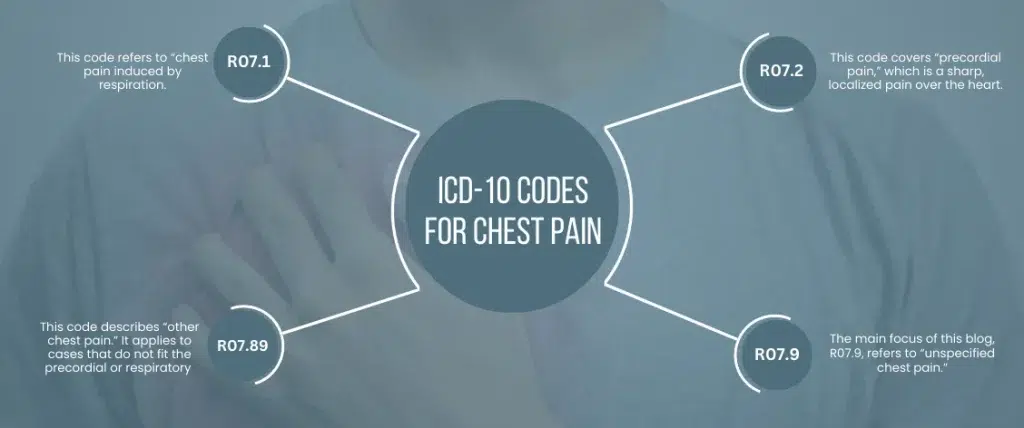
List of ICD-10 Codes for Chest Pain
When ribs move outward, thoracic volume increases, lowering thoracic pressure and allowing better airflow into the lungs.
Here are some examples of related ICD-10 codes with more detail:
- R07.1
This code refers to “chest pain induced by respiration.” It is used when the pain gets worse with breathing. It is often linked to respiratory disorders like pleuritic pain or rib fractures. - R07.2
This code covers “precordial pain,” which is a sharp, localized pain over the heart. It often raises concerns about cardiac problems and needs immediate evaluation. - R07.89
This code describes “other chest pain.” It applies to cases that do not fit the precordial or respiratory categories but still represent unique symptoms. - R07.9
The main focus of this blog, R07.9, refers to “unspecified chest pain.” It should be used when the cause of chest pain is unclear or being investigated.
Billable ICD-10 Code for Chest Pain
ICD-10 code R07.9 is a billable code and is accepted by insurance companies for reimbursement. It can be used as a temporary diagnosis or a final one if the cause remains unknown. Correct use of billable codes ensures accurate records and faster payments.
Key Takeaways for Healthcare Providers
- Correct use of ICD-10 R07.9 ensures accurate records, proper billing, and quality patient care.
- Since chest pain can indicate many conditions, accurate coding improves diagnosis and reimbursement.
- Claim processing is a major challenge, and ICD-10 helps make the billing process smoother, improving physician reputation management and patient outcomes.
- Always follow the latest coding guidelines to ensure high-quality care.



Emily Thompson
Emily Thompson is a Revenue Cycle Management (RCM) Specialist with extensive experience in the medical billing industry. She helps healthcare organizations and medical billing companies improve claim efficiency, reduce A/R backlogs, and implement data-driven RCM strategies. Emily’s articles focus on end-to-end medical billing services, denial prevention, and technology-driven revenue optimization for healthcare practices across the U.S.