Our Revenue Cycle Management services got you covered from medical billing and coding to denial management. Focus on patient care, leave other burdens to us!
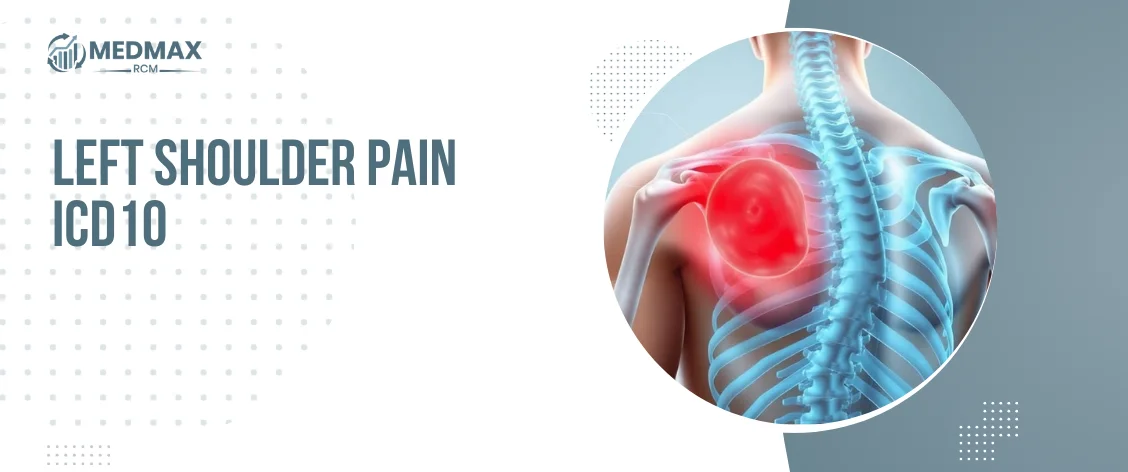
Left shoulder pain ICD 10 is a billing code used by physical therapists for shoulder pain, a common condition. Shoulder pain can arise from many underlying causes and often has a functional impact on patients including difficulty performing activities for daily living, interference with job and parenting duties and reduced ability to participate in sport and leisure activities.
Physical therapists frequently use the left shoulder pain ICD-10 code (M25.512) for billing, but more specific codes can improve reimbursement accuracy and reflect underlying conditions. Enrolling in an insurance billing course for therapists can help providers enhance their knowledge.
Shoulder pain can result from injuries like rotator cuff tears, arthritis, or impingement. Treatment includes physical therapy techniques such as manual therapy, modalities, neuromuscular re-education, and functional training.
Using an EHR with integrated billing, like Medmax RCM, can automate claim submissions, reduce errors, and save time by batching administrative tasks like invoicing and payment tracking.
Because of the frequency with which physical therapists encounter shoulder pain, it is important to know how to utilize the left shoulder pain ICD 10 code. In this article we will discuss the left shoulder pain ICD 10 code and touch on other related codes that can help make your billing more specific and improve the likelihood of accurate and timely reimbursement from payer sources.
When a physical therapist evaluates shoulder pain, their goal is to identify the root cause of the condition and understand how it affects joint structure, movement, and daily activities. A proper shoulder assessment helps therapists create a targeted treatment plan that reduces pain, restores function, and improves a patient’s ability to perform everyday tasks, work duties, and physical activities safely.
Some common causes of acute and chronic shoulder pain include:
Labral tear
Arthritis
AC joint separation
Rotator cuff tear
Rotator cuff strain
Shoulder dislocation
Post-surgical shoulder pain
Shoulder fracture
Adhesive capsulitis
Bicipital tendinopathies
Shoulder impingement
Overuse injuries
Treatments for shoulder pain include medication, injections, arthroscopic and open surgical procedures and physical therapy. Physical therapy is often a first-line, conservative treatment approach for many of these conditions. Physical therapists apply a variety of treatment techniques to address pain in the shoulder.
Therapeutic exercise: Stretching, passive, active and active assist range of motion exercises, strength training, endurance and power exercises
Neuromuscular re-education: Motor control, joint stabilization and muscle coordination training
Functional training: Sport, work and activity-specific training to prepare the shoulder for return to prior levels of activity
Patient education: Educating patients on how to modify activities, the importance of adherence to a home exercise program, strategies to manage pain and to reduce future injury
An introduction to ICD-10 Codes
ICD-10 codes are a combination of diagnoses and symptoms, so fewer codes need to be reported to completely describe a condition. Enhanced ICD-10 codes enable reporting of laterality (right vs. left) to designate which side of the body or limb is being evaluated.
Following this introduction we will discuss the left shoulder pain ICD10 code in more detail.
Who: All HIPAA-covered entities are required to submit ICD-10 codes if seeking reimbursement for services from an insurance company. This includes physical therapists.
What: The International Classification of Disease, 10th Revision (ICD-10) is a set of diagnosis, symptom, and procedure codes that physical therapists use daily in their practice. ICD-10 codes are alphanumeric codes. They begin with a letter and are always between three and seven characters with a decimal point placed after the third character. The more characters it has, the more specific it is.
Each code follows the following structure:
Characters 1-3 indicate the category of the diagnosis
Characters 4-6 indicate etiology, anatomic site, severity or other clinical detail
Character 7 is an extension value, for example:
A: initial encounter (anything related to care of the initial injury)
D: subsequent encounter (anything related to the phase of routine care of the injury while the patient recovers–this usually refers to rehabilitation)
S: sequela (other conditions that may result from the presence of the primary condition)
Note, for fracture care, there are several more extensions ( example: P, G, K, which signify malunion, delayed healing, or nonunion for a subsequent encounter)
When: ICD-10 codes must be submitted with relevant documentation whenever reimbursement is sought for covered services either by the healthcare entity itself or by a patient.
Why: While it may seem like an extra step in an already detailed process of documentation and billing, ICD-10 codes are required for a specific reason. Not only do they identify a medical diagnosis, but perhaps more importantly, they help insurance companies understand why the care you are providing is medically necessary and therefore, reimbursable.
Left shoulder pain ICD 10 codes
What is the ICD-10 code for left shoulder pain?
The ICD-10 code for pain in left shoulder (M25. 512) is a crucial tool for physical therapists in documenting and managing shoulder pain cases. Proper usage of this code ensures accurate billing, effective treatment planning, and better communication with insurers.
The left shoulder pain ICD 10 code can be used to account for both shoulder and AC joint pain. This code is considered specific enough for billing/reimbursement purposes but given that it fails to identify any health condition associated with the pain, alternative codes may be available that more accurately describe your patient’s condition.
Let’s look at some examples of more specific left shoulder pain ICD 10 codes to give you an idea of what to search for when documenting.
Shoulder pain ICD 10 codes
Description
S46.012A
Strain of the muscle(s) and tendon(s) of the rotator cuff of left shoulder, initial encounter
S43.52XD
Sprain of the left acromioclavicular joint, subsequent encounter
M75.42
Impingement syndrome of the left shoulder
M75.22
Bicipital tendinitis, left shoulder
Z47.1
Used to declare aftercare after joint (in this case shoulder) replacement surgery and used with code Z96.612 for presence of left artificial shoulder joint
Z48.89
Used to denote an encounter for other specified surgical aftercare which includes aftercare for musculoskeletal system surgery
To choose the correct ICD-10 code for left shoulder pain, healthcare providers should refer to the official annual updates released by the Centers for Medicare & Medicaid Services (CMS). These updated ICD-10 codes take effect on October 1 each year and remain valid through September 30 of the following year. Reliable online ICD-10 databases can also help providers quickly track coding changes and ensure accurate, up-to-date billing.
Additional code considerations for left shoulder pain
In addition to the primary code selections, place of occurrence codes (Y92) and external cause codes (V00-Y99) can be used to further increase specificity for billing. These codes are often used only during the initial evaluation. Below is an example for each type of code as it relates to left shoulder pain due to fall from ladder on construction site:
Y92.6: Building [any] under construction as the place of occurrence of the external cause
W11: Fall on and from ladder
While successfully treating a patient with left shoulder pain and billing using left shoulder pain ICD 10 codes may require a lot of hard work on your part, managing the billing, coding, patient scheduling and documentation doesn’t need to be.
Frequently Asked Questions
What is the ICD-10 code for left shoulder pain?
ICD-10 code M25. 512 for Pain in left shoulder is a medical classification as listed by WHO under the range – Arthropathies .
What happens if your left shoulder hurts?
Swelling, damage, or bone changes around the rotator cuff can cause shoulder pain. You may have pain when lifting the arm above your head or moving it forward or behind your back. Arthritis and bone spurs can also cause shoulder pain.
What is the ICD-9 code for left shoulder pain?
ICD-9 code 719.41 for Pain in joint, shoulder region is a medical classification as listed by WHO under the range -ARTHROPATHIES AND RELATED DISORDERS (710-719).
What are the different types of shoulder pain?
Most shoulder problems fall into four major categories: Tendon inflammation (bursitis or tendinitis) or tendon tear. Instability. Arthritis.
What is the diagnosis code M25 612?
ICD-10 code M25. 612 for Stiffness of left shoulder, not elsewhere classified is a medical classification as listed by WHO under the range – Arthropathies .
Emily ThompsonMedical Billing Services
Emily Thompson is a Revenue Cycle Management (RCM) Specialist with extensive experience in the medical billing industry. She helps healthcare organizations and medical billing companies improve claim efficiency, reduce A/R backlogs, and implement data-driven RCM strategies. Emily’s articles focus on end-to-end medical billing services, denial prevention, and technology-driven revenue optimization for healthcare practices across the U.S.
Emily Thompson is a Revenue Cycle Management (RCM) Specialist with extensive experience in the medical billing industry. She helps healthcare organizations and medical billing companies improve claim efficiency, reduce A/R backlogs, and implement data-driven RCM strategies. Emily’s articles focus on end-to-end medical billing services, denial prevention, and technology-driven revenue optimization for healthcare practices across the U.S.