Our Revenue Cycle Management services got you covered from medical billing and coding to denial management. Focus on patient care, leave other burdens to us!
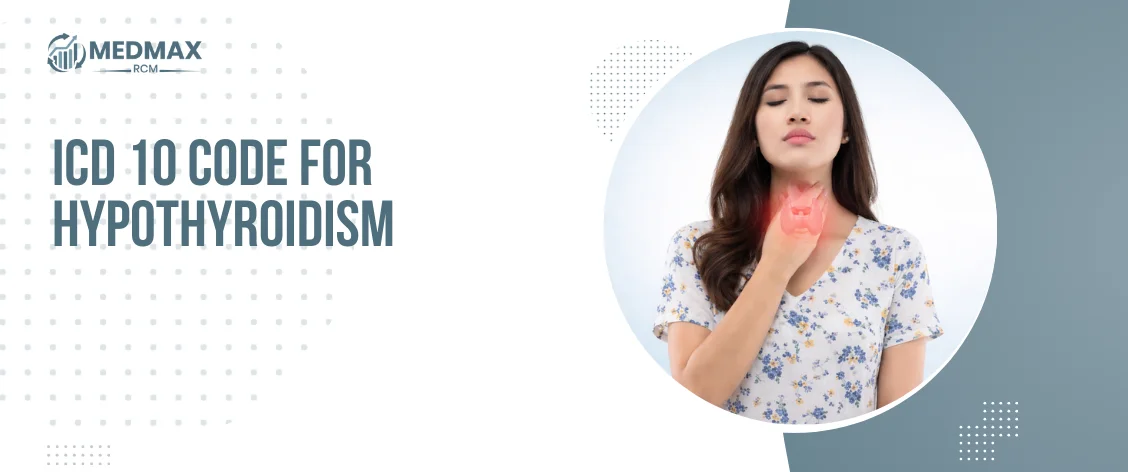
Hypothyroidism and ICD-10 coding are closely connected in modern healthcare. The ICD-10 system provides a standardized method for identifying and documenting medical conditions, including disorders related to the thyroid gland. By using these codes, healthcare professionals can communicate clearly, maintain accurate records, and ensure proper diagnosis and billing.
For thyroid disorders like hypothyroidism ICD 10 helps doctors and medical coders classify each condition correctly. This coding system essentially acts as a common language across healthcare systems, allowing providers, insurers, and medical staff to stay aligned when recording patient diagnoses.
In this article, we’ll take a closer look at the ICD-10 code E03.9, explain when it is used, and explore other important codes related to different types of hypothyroidism.
Hypothyroidism occurs when the thyroid gland does not produce enough thyroid hormones, which are essential for regulating metabolism and many body functions. Because hypothyroidism can occur for several different reasons, medical coding requires precise identification of the condition.
Within the ICD-10 classification system, each type of hypothyroidism is represented by a specific code. One of the most commonly used codes is E03.9, which represents unspecified hypothyroidism.
This code replaced the ICD-9 code 244.9 when the healthcare industry transitioned to ICD-10. It is generally used when a patient has hypothyroidism, but the exact cause or specific type has not been clearly documented.
By using E03.9, healthcare professionals can still accurately document the condition even when detailed clinical information is limited.
ICD-10 Codes for Different Types of Hypothyroidism
Understanding the different forms of hypothyroidism is essential for accurate medical coding. Each variation of the condition is represented by a unique ICD-10 code, helping healthcare providers classify and document diagnoses correctly.
While E03.9 is used for unspecified cases, several other ICD-10 codes are available for more specific types of hypothyroidism. These codes help ensure proper diagnosis, treatment planning, and medical record accuracy.
Classification of ICD-10 Codes for Hypothyroidism
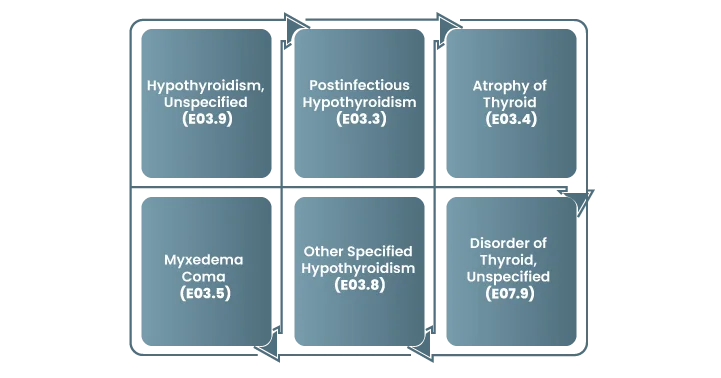
Below are some important ICD-10 codes used to classify different types of hypothyroidism:
Hypothyroidism, Unspecified (E03.9)
This code is used when a patient is diagnosed with hypothyroidism but the exact cause or subtype has not been identified. It provides flexibility for cases where the clinical documentation does not specify further details.
Postinfectious Hypothyroidism (E03.3)
This code applies when hypothyroidism develops after an infection that affects the thyroid gland. It allows healthcare professionals to clearly identify cases linked to previous infections.
Atrophy of Thyroid (E03.4)
This code is used when hypothyroidism results from acquired atrophy or shrinkage of the thyroid gland. It helps accurately document conditions where thyroid tissue gradually decreases in size.
Myxedema Coma (E03.5)
Myxedema coma is a severe and life-threatening complication of hypothyroidism. It is characterized by symptoms such as mental confusion, extremely low body temperature, and severe metabolic disturbances. This condition requires immediate medical attention.
Other Specified Hypothyroidism (E03.8)
The E03.8 code is used when hypothyroidism occurs due to specific causes that are not covered by other ICD-10 codes. It provides an additional category for accurately classifying unique cases.
Disorder of Thyroid, Unspecified (E07.9)
When a thyroid disorder is present but the exact type of thyroid condition has not been specified, this code is used. It indicates a general thyroid problem without assigning a precise diagnosis.
Together, these ICD-10 codes allow healthcare professionals to accurately categorize various thyroid conditions, ensuring better documentation and improved patient management.
General Information About ICD-10
The International Classification of Diseases, Tenth Revision (ICD-10) is a globally recognized system used for identifying and coding medical conditions. It helps healthcare providers maintain standardized medical records and ensures consistent reporting of health data worldwide.
For example, if a patient visits a clinic with symptoms suggesting hypothyroidism, a provider may use ICD-10 code E03.9 if the condition is diagnosed but the exact cause has not yet been determined.
Using the correct ICD-10 code helps with:
Accurate diagnosis documentation
Proper treatment planning
Efficient insurance billing and claims processing
The shift from ICD-9 to ICD-10 significantly improved medical coding by introducing greater detail and specificity, making healthcare data more accurate and globally consistent.
Clinical Features of Hypothyroidism
Hypothyroidism develops when the thyroid gland fails to produce adequate amounts of thyroid hormones. Because these hormones influence metabolism and many body processes, the condition can cause a wide range of symptoms.
Common symptoms of hypothyroidism include:
Persistent fatigue
Unexplained weight gain
Sensitivity to cold temperatures
Depression or low mood
Dry or rough skin
Constipation
As the condition progresses, more severe symptoms may appear, such as:
Slower speech
Puffy face or swelling around the eyes
Thinning hair
Reduced senses
Slowed heart rate
In extreme cases, hypothyroidism can lead to myxedema coma, which is a medical emergency requiring immediate treatment.
The condition may develop due to several factors, including:
Autoimmune disorders such as Hashimoto’s thyroiditis
Surgical removal of the thyroid gland
Certain medications
Iodine deficiency
Diagnosis typically involves reviewing the patient’s medical history, physical examination, and blood tests. These tests often measure thyroid-stimulating hormone (TSH) levels and sometimes thyroxine (T4) levels.
Treatment usually includes daily synthetic thyroid hormone medication, which helps restore normal hormone levels. With proper treatment, routine monitoring, and a healthy lifestyle, most individuals with hypothyroidism can live normal, healthy lives.
Coding Guidelines for Hypothyroidism ICD 10
When coding hypothyroidism in ICD-10, healthcare providers and medical coders should follow certain guidelines to ensure accurate documentation.
Be Specific Whenever Possible
ICD-10 encourages detailed coding. Healthcare professionals should try to identify the exact type and cause of hypothyroidism whenever possible.
Use Unspecified Codes Carefully
Although E03.9 is widely used, it should only be applied when more detailed clinical information is unavailable.
Document the Underlying Cause
Whenever the cause of hypothyroidism is known, it should be clearly documented. This improves coding accuracy and helps create a more complete medical record.
Following these guidelines ensures that medical coding remains precise, which ultimately supports better patient care and smoother billing processes.
Final Thoughts
Accurately coding hypothyroidism in ICD-10 such as using E03.9 for unspecified hypothyroidism is essential for healthcare providers and medical coders. Choosing the correct code ensures proper documentation of the condition and helps differentiate between the various forms of hypothyroidism.
By following ICD-10 coding guidelines and selecting the most appropriate code, healthcare professionals can improve communication, support accurate billing, and maintain reliable medical records.
As healthcare systems continue to evolve, staying updated with the latest coding practices is increasingly important. Ongoing training and collaboration between healthcare providers and medical coders help ensure consistent and accurate documentation.
Ultimately, maintaining clear and precise coding for hypothyroidism not only supports efficient healthcare administration but also contributes to better patient care and improved clinical outcomes.
Frequently Asked Question (FAQs)
What Is Hypothyroidism?
Hypothyroidism, also known as an underactive thyroid, is a common condition in which the thyroid gland does not produce enough thyroid hormones to meet the body’s needs. These hormones play an important role in controlling metabolism, energy levels, and body temperature. Common symptoms include severe fatigue, weight gain, depression, dry skin, and increased sensitivity to cold.
What is the difference between hyperthyroidism and hypothyroidism?
Hypothyroidism and hyperthyroidism are both thyroid disorders but they affect the body in opposite ways. Hypothyroidism occurs when the thyroid is underactive and produces too few hormones, which slows down metabolism. In contrast, hyperthyroidism happens when the thyroid becomes overactive and produces too many hormones, causing metabolism to speed up. Although both conditions can impact weight, heart rate, and energy levels, their symptoms and treatments are quite different.
How do I know if I have hyperthyroidism or hypothyroidism?
Hypothyroidism (underactive thyroid) usually slows the body down and may cause symptoms such as fatigue, weight gain, sensitivity to cold, and constipation. Hyperthyroidism (overactive thyroid), on the other hand, speeds the body up and may lead to symptoms like anxiety, weight loss, heat intolerance, and a rapid heartbeat. Both conditions are typically diagnosed through a TSH blood test, but a healthcare provider is needed for an accurate diagnosis and proper treatment plan.
Which is easier to treat, hypothyroid or hyperthyroid?
In many cases, hypothyroidism develops gradually and is often considered easier to manage. Treatment usually involves taking a daily thyroid hormone replacement pill, whereas hyperthyroidism may sometimes require more complex treatments such as medication, radioactive iodine therapy, or surgery.
Is high TSH hypo or hyper?
A high TSH level generally indicates that the thyroid gland is not producing enough thyroid hormone, which is known as primary hypothyroidism. On the other hand, a low TSH level typically suggests that the thyroid is producing too much hormone, a condition known as hyperthyroidism.
Emily ThompsonMedical Billing Services
Emily Thompson is a Revenue Cycle Management (RCM) Specialist with extensive experience in the medical billing industry. She helps healthcare organizations and medical billing companies improve claim efficiency, reduce A/R backlogs, and implement data-driven RCM strategies. Emily’s articles focus on end-to-end medical billing services, denial prevention, and technology-driven revenue optimization for healthcare practices across the U.S.
Emily Thompson is a Revenue Cycle Management (RCM) Specialist with extensive experience in the medical billing industry. She helps healthcare organizations and medical billing companies improve claim efficiency, reduce A/R backlogs, and implement data-driven RCM strategies. Emily’s articles focus on end-to-end medical billing services, denial prevention, and technology-driven revenue optimization for healthcare practices across the U.S.